Prepare a smart-switch brief before choosing installation work
Separate a no-wire remote from a fixed electrical change and make the project scope clear before comparing quotations.
Updated:
Identify which kind of switch you mean
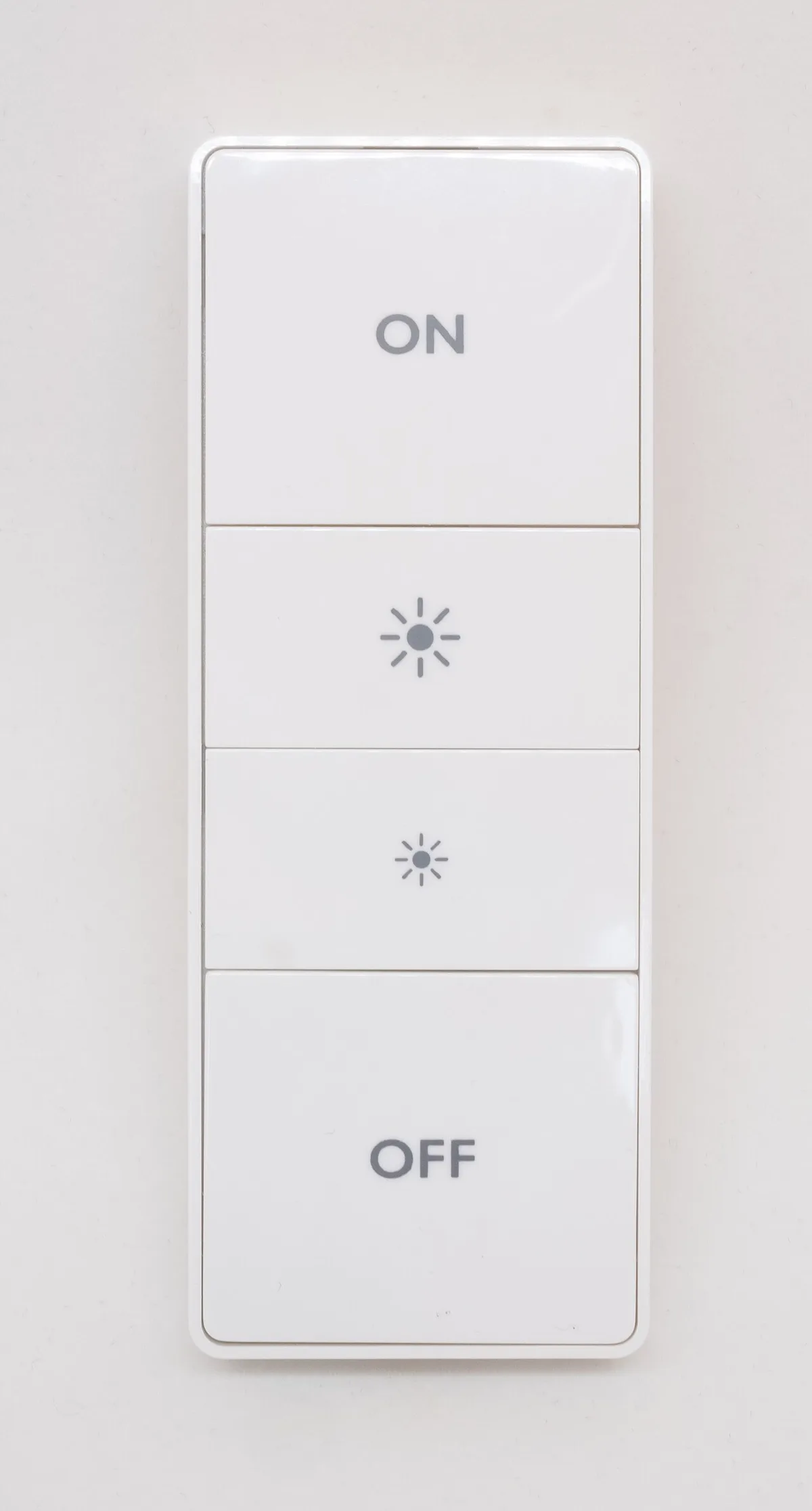
The word switch can describe a battery-powered remote or a device involved in fixed electrical wiring. Those are different projects. Philips Hue's wireless dimmer is described as battery powered with no-wire installation, so its mounting decision should not be confused with replacing a mains-connected wall switch. Identify the product category before buying parts or comparing costs.
If the project involves electrical installation work, use the registered-electrician route recommended by Electrical Safety First. This article helps you prepare a purchasing and quotation brief; it does not provide wiring instructions, establish that an existing installation is suitable or replace an assessment of the actual site.
Philips Hue UK: wireless dimmer switch ? Electrical Safety First: find a registered electrician ?
Describe the outcome without prescribing the wiring
Write what you want the room to do: retain an understandable wall control, operate a specified group of lights or add a reachable control position. Include the exact lighting products and platform already in use. The intended outcome is more useful to an installer than a shopping link with an assumption that the product must fit.
Do not open covers or infer wiring from the appearance of a switch plate for this record. Existing documentation and accessible product identifiers are enough to start the brief. Leave technical suitability, required work and any applicable documentation to the competent person assessing the installation. A clear brief can expose an unsuitable purchase before it becomes an installed problem.
Separate equipment and service lines
Ask for the proposed equipment, labour, necessary additional materials and any other included work to be stated separately. Record what is excluded as well. If a quote includes a control device, do not add the same device again as a separate basket purchase. If it excludes it, the complete budget still needs that line.
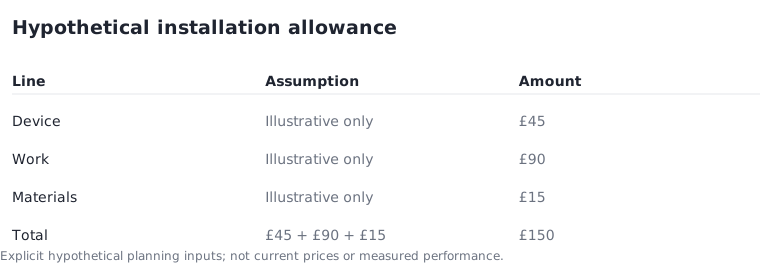
For a hypothetical example, assume £45 for the device, £90 for the quoted work and £15 for required materials. The combined allowance is £150. These figures are invented solely to demonstrate addition; they are not local market rates, a recommended scope or an estimate that a real installation will cost that amount.
Compare quotations on an equal scope
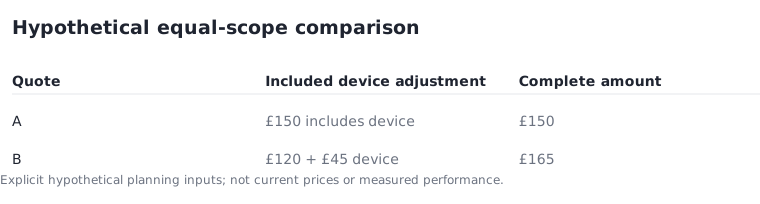
Suppose an illustrative quote A totals £150 and includes the assumed £45 device. Quote B is £120 but excludes it. Adding the same assumed device to B produces £165. The apparently lower headline is then £15 higher on the defined scope. This arithmetic is useful only when the work and required equipment are genuinely comparable.
Record any difference that prevents a fair comparison rather than forcing both quotes into one score. A different control function, missing assessment or excluded remedial work may change the project. Ask for the scope to be made explicit before selecting a quote; the cheapest number on an incomplete list is not a complete answer.
Keep the handover requirements in the brief
Include the everyday control you expect to use after the work and the setup information you need to retain. Ask what product instructions and appropriate installation documentation will be supplied for the actual work. Do not assume one universal certificate or approval applies to every project across the UK.
Use Electrical Safety First's official electrician-finding route to identify the relevant registered service, then keep the agreed scope and final product model with your room record. If a no-wire remote meets the original need, that may be a different project to consider. Choose between clearly described outcomes rather than treating all products called smart switches as interchangeable.
Electrical Safety First: find a registered electrician ?