Choose fixed white, adjustable white or colour for the job
Separate brightness from white tone and decorative colour so you pay for the lighting control you actually intend to use.
Updated:
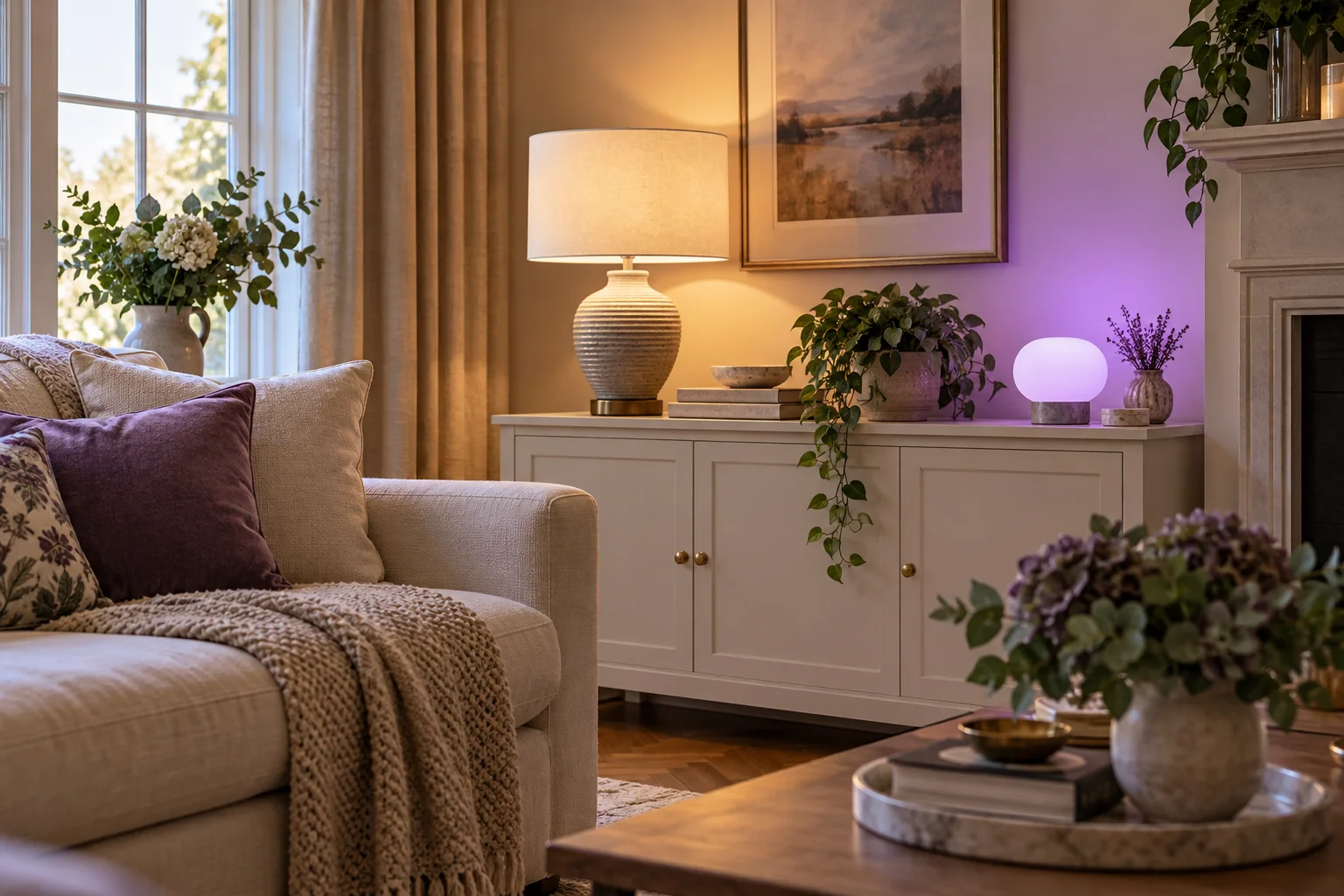
Choose the type of adjustment you need
Fixed white, adjustable white and colour-changing light solve different tasks. Philips Hue's UK guide distinguishes a fixed warm-white family from adjustable white ambience and the family that adds colour. Dimming is a separate question from changing the white tone. Decide which adjustment matters in the particular lamp before choosing a product family.
A reading corner might need a useful brightness adjustment without decorative colour. A room used for several activities might benefit from adjustable white, while a decorative accent could justify colour. These are planning examples, not prescriptions for your home. The point is to name the desired control rather than assuming the longest feature list is automatically the best purchase.
Philips Hue UK: White and White ambience ?
Map the lighting tasks by position
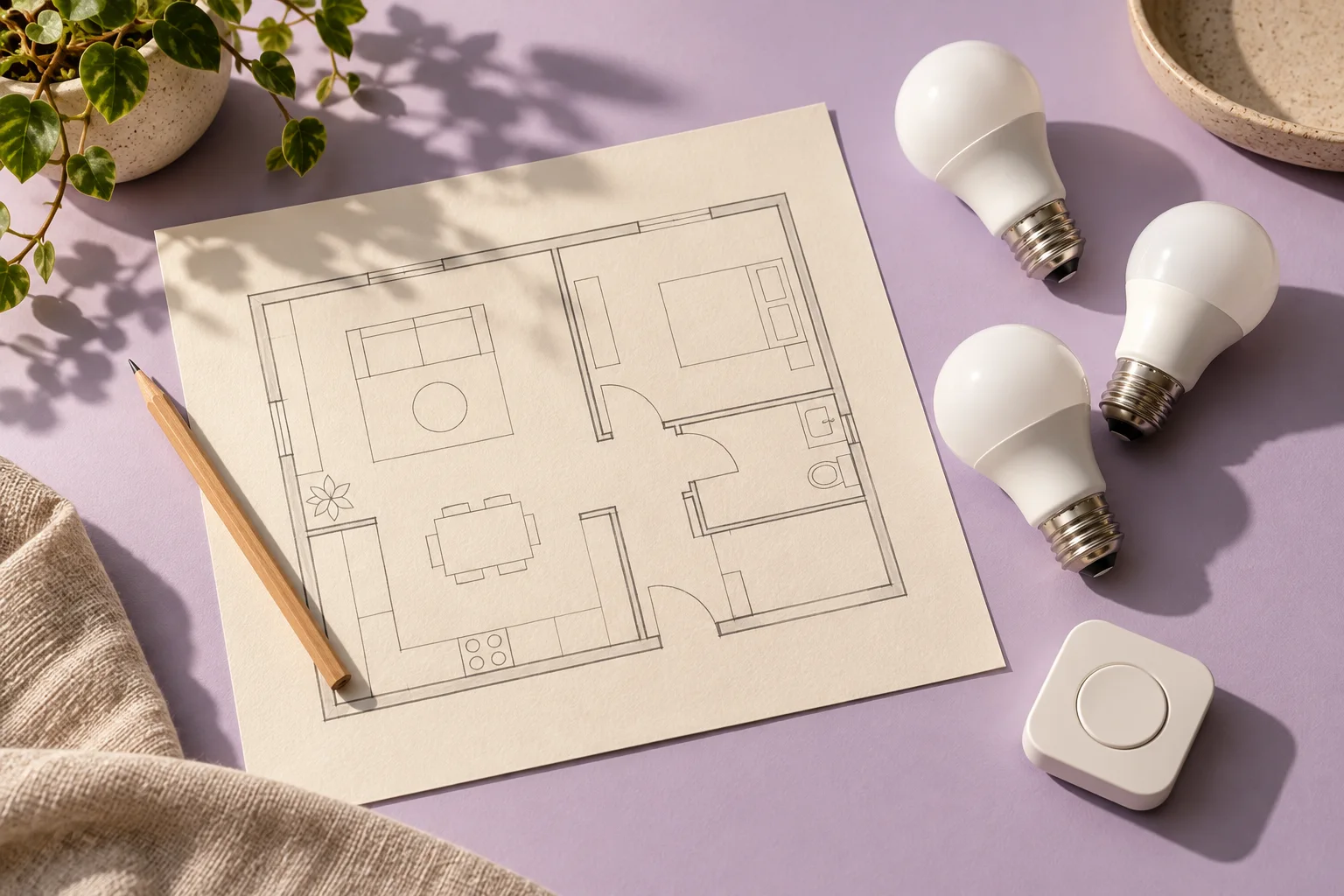
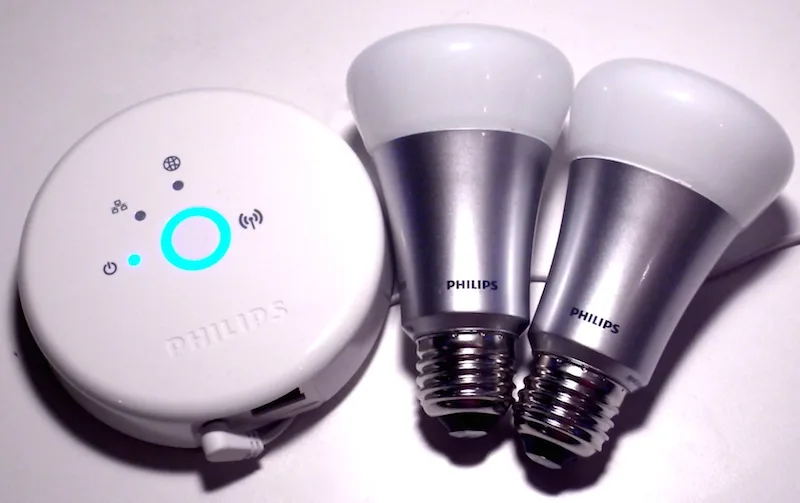
List the positions you want to change and the actual use of each one. Avoid assigning an entire room a single requirement if the lamps do different jobs. A ceiling light used for general illumination and a small decorative lamp can have different priorities even when they share the same platform.
For an explicit example, suppose four positions include two general lamps, one reading lamp and one decorative accent. If only the accent needs colour, the colour-required count is one out of four. That is a quantity decision, not a claim that the other lights should use a particular technology. Record the white-tone and brightness needs for all four separately.
Compare output under the intended setting
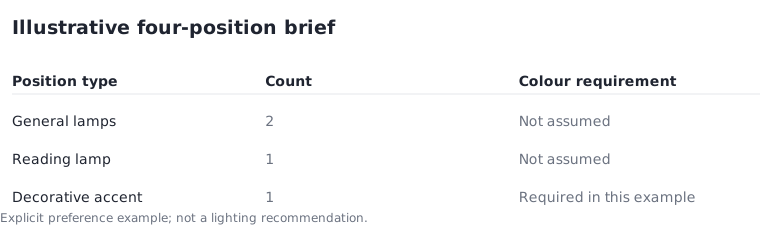
Once you know the type of adjustment, compare the stated light output under relevant conditions. The Hue brightness guide separates lumens from input watts and discusses the conditions shown with bulb output. A maximum figure at one white setting should not silently stand in for every possible decorative colour.
The historical filament bulb photograph illustrates a visible decorative light source. Its glow cannot tell you the available colour range, current product family or measured output. Use the exact model documentation for those facts. Keep the shape and appearance decision alongside the performance record, rather than using an attractive photograph as evidence for both.
Philips Hue UK: lumens and smart bulb brightness ?

Calculate the premium for the chosen positions
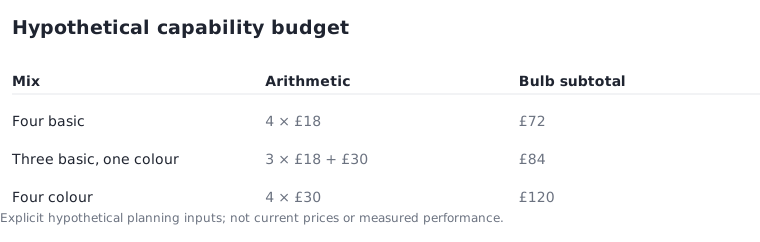
Assume a basic option costs £18 per bulb and a colour-capable option costs £30. Four basic options would total £72. Three basic options plus one colour-capable option would total £84. Four colour-capable options would total £120. These are hypothetical planning amounts, not current prices or a compatible shopping list.
In this example, adding colour only where it is required costs £12 above the all-basic basket. Choosing it for all four positions adds £48. The arithmetic does not decide your preference, but it makes the trade-off explicit. Any hub, control, delivery or installation costs remain separate until added to the complete budget.
Write a setting-based purchase brief
For each lamp, finish a short line containing its physical requirement, useful brightness, desired white adjustment and whether decorative colour is actually needed. Add the exact model and supported platform after checking the official documentation. This makes it easier to compare a substitute product without restarting the whole decision.
If you are uncertain about the effect you want, start with the smallest suitable scope and assess it in your own room before expanding. Do not describe that personal trial as evidence about all homes or promise a health benefit from a colour setting. The useful outcome is a deliberate mix of capabilities tied to real lighting tasks, with the extra cost visible.
Philips Hue UK: White and White ambience ?